Showing posts with label Cairo. Show all posts

Monday, 26 March 2018

Malfuf wa Malik: Min Zamaan


First off, here is Farah Yousef, a young Syrian singer, a runner up at the Arab Idol 2013. Read more about her here.


Today I am posting an old, old short story I wrote for a guest post the same year Farah here bagged the runner up's place. Wrote it a few months before I left Cairo. The blog where this was published first, transitioned to a different platform, and then my computer broke when I moved from Cairo in 2014, and not all my files were recovered from it, so this story was lost to me. I know, I am bad at housekeeping both real and virtual!  But today something clicked in my brain (talk about tubelights!) and I recovered this from a place I hadn't bothered to sift through before - the sent folder. So, here it is, for the final installment of MwM ~

Min Zamaan*

Sunday, 26 November 2017

Malfuf wa Malik : Jordanian celebrations of a Khedival Love


Listen to the Jordanian opera singer Zeina Barhoum below:


Just after I wrote in a previous post here that most Arab women tend towards altos, I discovered a whole slew of singers who are not, naturally! what else should happen when anyone reads and believes such silly generalisations :)


‘I’m out of here! Off to Europe!’

Thursday, 20 April 2017

Q is for...what else? - Qahira!


is for
Qusai, from Saudi Arabia- here with Umm al Dunya, or the Mother of the World:


And here again is my fav Egyptian musician - Amr Diab, singing Qahira, featuring another well-known Egyptian artiste, nicknamed 'the King' – Mohammed Mounir. The video's subtitled, and Amr completely sums up my feelings on the subject :)


And that stringed instrument that the lady is playing? that's called the Qanun, part of traditional Arabic music ensembles, played by plucking with two thimble-like picks worn on each hand.  The Indian santoor is a close relative with the same Middle Eastern roots. 


Qahira!


Al Qahira is the Arabic name for Cairo, the largest city in the Arablands and also in Africa.  Including its greater metropolitan area, it is among the top 20 cities in the world in terms of size. Located on the river Nile, just before the delta fans out, its strategic position has meant that it has played an important role in Egypt since antiquity. It's called ‘Umm al Dunya’ or 'Mother of the World’ by local Cairenes, a nickname that's come about due to the impact of the city on the wider Arab culture.

The Sphinx and the Pyramid of Khafre just
outside Cairo on the Giza Plateau. 

Heliopolis on the East side was the site of the famous, ancient sun temple. Memphis, located 20 km away, was the capital of several Old Kingdom dynasties. The Romans built a fortress near Cairo and called it Babylon.  It's been a pivot of political, social and cultural life for millennia.

Sunset over the Qasr al Nil bridge, leading to Tahrir
Square, scene of protests during 2011. 

The Arabs conquered Egypt in 641 CE, and Fustat was their first capital located a little southwards from Cairo, the administrative hub for around 5 centuries.  

The minarets of Sultan Hassan and Al Rifai Mosques.

The Fatimid dynasty conquered Egypt in 969 and Al Qahira was built by Jawhar al Siqilli, a Sicilian slave and the commander in chief of Muiz li Din Allah, the fourth Fatimid Caliph.  

Salahuddin's Citadel, and Mohammed'd Ali Mosque within it, on the
right in the far distance. The Mosque more recent than the Citadel.
 

View of Cairo from the Citadel. Not for nothing is it known
as the City of a Thousand Minarets!

Salahuddin Ayyoub overthrew the Fatimids in 1170’s, realigned Cairo towards the Caliphate in Baghdad. He also built the Cairo Citadel which served as the seat of the government right up to the 19th century.

The Nile at night. The river has an enormous impact on Cairo
as well as Egypt as a whole. Egypt is because of the Nile.

In 1250, slave soldiers, known as Mamluks, took control of Cairo.  The city continued to flourish as a hub of the spice trade.  The Mamluks ruled till the Ottomans overthrew them in the 16th century and Cairo passed into Turkish hands.  

Sharia Khiyyamiya, or the Tentmakers' Street in Islamic Cairo.


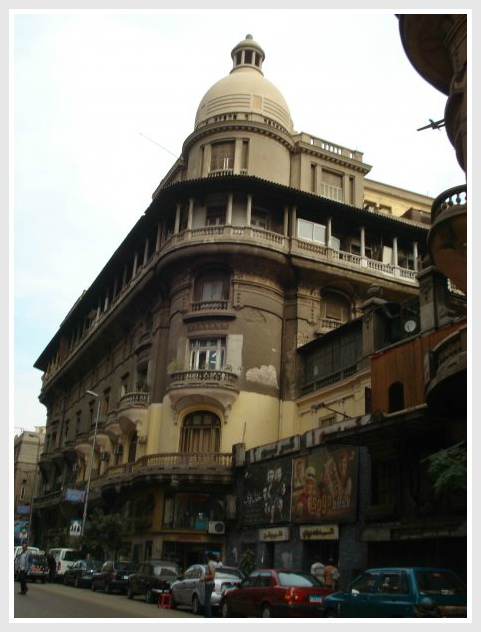
Emad el Din Street in Downtown Cairo. In the 19th century,
Ismail Pasha, the then ruler of Egypt, remodelled/modernised
Cairo in the style of European capitals, especially Paris. He
also built the Suez Canal with huge loans from European banks, 

and these enormous debts meant Europeans soon sat on the 
Egyptian cabinet.


In the last few centuries, modern Cairo has seen a French invasion, become a British protectorate, been the venue for three national revolutions, and umpteen other politically, socially charged events. 


Did you know the Arabs are very foreigner-friendly? In twenty years, I remember meeting only two Arabs who were rude and Quarrelsome and they were both desperately unhappy people. In contrast, I’ve met many, many Arabs who went completely out of their way to help us - total strangers.


That’s not to say the guides and touts, cabbies and shopkeepers, won’t cheat sometimes, of course some of them will try. There are a few dodgy ones everywhere who spoil the majority-reputation. But the cheaters will do it with unfailing courtesy and a very articulate, not Quiet, charm :)


Posted for the A-Z Challenge 2017 


Monday, 23 May 2016

Readings


Everything draws to a close, all things –
words, wine, meetings with friends, evenings
pleated through with cursive laughter,
the delight of the deepest yearnings.
The flame that will choose to burn softer
before it drops down with the mothwings.
The breeze that feathers nights, after
the slow spiral of the hot mornings.
One by one the lines and the chapters
till the last, till there remains nothing.


Monday, 16 December 2013

Min Zamaan


Yeah, I know you’re surprised that there is no poem here today.  That’s because I am guest posting on Some Facts, Some Nonsense, and mighty thrilled I am too, to be doing so.  If you are here from IndiBlogger, then I don’t need to say anything more.  You already know this fantastic blog and Debajyoti’s tongue-in-cheek take on blogging and the blogosphere in general, his perfectly hilarious cartoons and commentary.  If you’re not from IndiBlogger, then I must tell you that SFSN has been on my blogroll for the longest time, so you can imagine how pleased I am to be guest posting over there with Min Zamaan, a story about Trishna coming to Old Cairo and discovering...um....more antiques than she had bargained for.  Go on over and read it - click here for the link.

Getting back to the sudden lack of poems/stories, I came across a forum discussion recently where the majority view was that a hotchpotch of poems and flash fiction does not even qualify as a blog.  Having a blogspot attached to one’s space doesn’t a blog make, apparently, unless personal opinions and life events are showcased therein.  And all this time I thought I was blogging! Anyways, be that as it may, I have now remedied this dismal situation by posting my opinion of SFSN.  And finally, to twist a well-known phrase, hopefully beyond recognition – facts may be sacred, but fiction is not; and comment is free.  So do please add yours, here or over there.


Friday, 20 September 2013

Write....Edit....Publish - Moving On - (and Staying Put) - in Cairo


It's  time to head back to Write...Edit....Publish for this month's prompt, which is Moving On.  My flash is based in Cairo, where life has been harder than usual for ordinary Egyptian people for a couple of years now.  This is the story of Doa, and her struggle to keep going. Sometimes a step backwards is the only way to move on.


One Step Backwards


It is a glorious day and the trees on Sharia Moustafa Kemal are still ablaze with flowers.  A sprinkling of petals lines the pavement under Doa’s feet as she walks.  It is early still, the sun is soft and warm, with a fluorescent quality to the light.  She turns off into Road 84, and a few steps later reaches her destination; unlocks the back door of her workplace, gets in and puts the kettle on.  Her employer, Leila, will be here in half an hour.  Doa has come in especially early for some private time.

She is no longer young, but she still brings a fierce passion to work, a sense of integrity beyond just dry duty, trained to a level of skill and single-minded diligence no longer common.  Her Great-aunt Hayat was once part of the Ma’adi household of Princess Fawzia, and Doa was brought up to those strict benchmarks.  She is no ordinary worker.

She works now for a boutique confectionery in the upmarket neighbourhood of Ma’adi.  For years she was in service at a waterfront restaurant on the Nile Corniche.  But then the revolution came, the world withdrew, the tourists stopped coming, and the restaurant trimmed down its staff.  Doa lost her steady job.  But alhamdulillah, she has found this one not too long after, many of her co-workers still haven’t.  Her nephew, Karim remains unemployed too.

She mentally rifles through her to-do list while the tea brews.  A profusely blossoming branch of cassia taps against the facing window, a hoopoe pecks at the lawn in the early sunshine.  Doa hums a little and then stops abruptly.  Too many problems, the old order upended, the changes so fast that she doesn’t know what to make of them.  The revolution came like a sandstorm out of the Sahara and blew away everything.  The whole nation drunk on its promise, heady with optimism - things would get better after the dust settles.  But all she knows is that it hasn’t settled yet. 

And she knows that Karim has not worked for months now, he used to give camel rides at the Giza Pyramids, but the tourists don’t come anymore.  One of his friend’s animal died because he couldn’t afford to treat the strange illness she had picked up.  Many camel owners have had to just let their animals go, leave them to wander bewildered and forage for food, because the men couldn’t feed them indefinitely.  They died in the desert, unused to fending for themselves.    

She had advised Karim to sell, and he took Abu’l Hawl, named after the Sphinx, dragged him off to the Friday market at Birqash but then brought him back again.  The trade in camels fares no better than tourism, Karim had mumbled.  Whereas sellers used to come from as far away as Somalia and Sudan, now they are only a handful, their animals starved and lean, the bargaining desultory, the prices, and the traders themselves, depressed. 

Doa doesn’t know about that, she hasn’t ever been to Birqash.  Probably some butcher from Imbaba had bid for the animal, and Karim didn’t have the heart to sell.  Abu’l Hawl might have shed a canny tear in the way of camels, and Karim had turned back home.  Depressed prices indeed!  Is the price of anything else down?  Ya Rabb! Carrots at ten guinays the other day, she has never seen that before!

She has suggested Karim set up a roadside stall, but then, stiff competition there too.  The refugees keep pouring in from Syria, their men set up impromptu shops and sell incredibly cheap, their women marry local men with some paltry guinays for mahr.  That country is in far worse quandary.  Doa doesn’t grudge them whatever shelter they find here, poor souls, but does every catastrophe have to happen all at once? Life has been uncommonly hard lately, no reason to sing. 

Doa plans on asking Leila for a favour, and though she feels embarrassed, she hopes it won’t be refused.  They will pool their resources together, she and Karim, and set up a small shop.  They have already scouted out the place, and paid a deposit.  There is no-one but Karim she can call family.  Her brother and sister-in-law, Karim’s parents, died years ago. Her sister Huda migrated to Canada soon after.  In fact, lately Huda has been pestering her to leave too, but Doa can’t take on the added hardship of an alien land.  No, aunt and nephew must stick together, and insha’allah, Karim’s new shop will keep the camel in fodder, and the humans too, till the times change back again. 

The tea is ready, and she pours out a dainty china cup for Leila, a teaglass for herself.  Her timing is perfect.  The door swivels open, Leila enters as Doa sets the cup down.

“Good morning!”

“Good morning. You’re early! How’re things?”

Doa hesitates, then bravely plunges in, “Everything’s good, alhamdulillah.  You remember Karim Madame? He needs a small loan, to set up a shop –” 

Doa has never before asked for a loan in all her life, why has fate chosen this particularly craven humiliation for her? She keeps her eyes firmly on the teaglass as she explains the details, and finally looks up to find Leila singularly grave.

“Of course I’ll give what I can,” Leila speaks slowly, “you’ve worked hard I know.  Take it as a gift, habibti, no need to repay.”

“Oh no, I can’t do that, it’s a large sum! We’ll pay back as soon as we can, as the shop starts paying.”

“No, that won’t be possible. You see, we’re going.  Things have been –rather difficult.  You know how it is. The uncertainty, all this street violence.” The younger woman sighs, “So we’re moving –.  Back to Beirut.”

Doa finishes her tea in silence and gets to work. Other employees trickle in. The cassia branch still tap-taps loudly against the glass, but the sun looks harsher now, the lawn empty.  The hoopoe has flown.
 
WC - 1000.  All feedback welcome.