
 |
| is for |
Qusai, from Saudi Arabia- here with Umm al Dunya, or the Mother of the World:
And here again is my fav Egyptian musician - Amr Diab, singing
Qahira, featuring another well-known Egyptian artiste, nicknamed 'the King' –
Mohammed Mounir. The video's subtitled, and Amr completely sums up my feelings on the subject :)
And that stringed
instrument that the lady is playing? that's called the Qanun, part of
traditional Arabic music ensembles, played by plucking with two thimble-like
picks worn on each hand. The Indian santoor is a close relative with the same Middle
Eastern roots.
Qahira!
Al Qahira
is the Arabic name for Cairo, the largest city in the Arablands and also in
Africa. Including its greater
metropolitan area, it is among the top 20 cities in the world in terms of size.
Located on the river Nile, just before the delta fans out, its strategic position
has meant that it has played an important role in Egypt since antiquity. It's called ‘Umm
al Dunya’ or 'Mother of the World’ by local Cairenes, a nickname that's
come about due to the impact of the city on the wider Arab culture.
 |
| The Sphinx and the Pyramid of Khafre just outside Cairo on the Giza Plateau. |
Heliopolis
on the East side was the site of the famous, ancient sun temple. Memphis,
located 20 km away, was the capital of several Old Kingdom
dynasties. The Romans built a fortress near Cairo
and called it Babylon. It's been a pivot of political, social and cultural life for millennia.
 |
| Sunset over the Qasr al Nil bridge, leading to Tahrir Square, scene of protests during 2011. |
The
Arabs conquered Egypt in 641 CE, and Fustat was their first capital located a
little southwards from Cairo, the administrative hub for around 5
centuries.
 |
| The minarets of Sultan Hassan and Al Rifai Mosques. |
The
Fatimid dynasty conquered Egypt in 969 and Al Qahira was built by Jawhar al Siqilli,
a Sicilian slave and the commander in chief of Muiz li Din Allah, the fourth
Fatimid Caliph.
 |
| Salahuddin's Citadel, and Mohammed'd Ali Mosque within it, on the right in the far distance. The Mosque more recent than the Citadel. |
 |
| View of Cairo from the Citadel. Not for nothing is it known as the City of a Thousand Minarets! |
Salahuddin
Ayyoub overthrew the Fatimids in 1170’s, realigned Cairo towards the Caliphate in Baghdad. He also built the Cairo Citadel which served as the seat
of the government right up to the 19th century.
 |
| The Nile at night. The river has an enormous impact on Cairo as well as Egypt as a whole. Egypt is because of the Nile. |
In 1250, slave soldiers, known as Mamluks, took control of Cairo. The city continued to flourish as a hub of the spice trade. The Mamluks ruled till the Ottomans overthrew them in the 16th century and Cairo passed into Turkish hands.
 |
| Sharia Khiyyamiya, or the Tentmakers' Street in Islamic Cairo. |
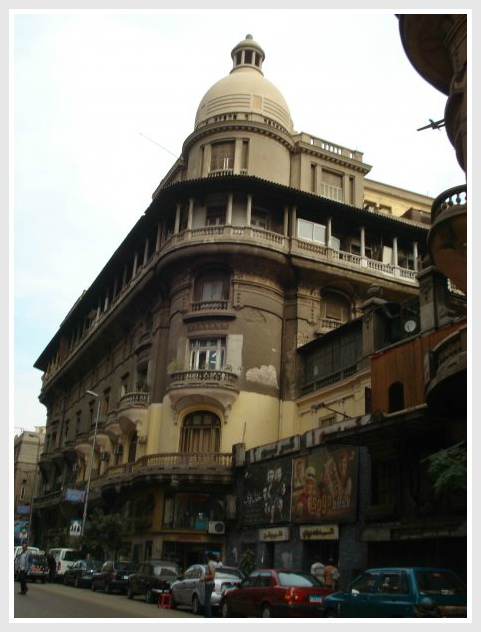 |
| Emad el Din Street in Downtown Cairo. In the 19th century, Ismail Pasha, the then ruler of Egypt, remodelled/modernised Cairo in the style of European capitals, especially Paris. He also built the Suez Canal with huge loans from European banks, and these enormous debts meant Europeans soon sat on the Egyptian cabinet. |
In
the last few centuries, modern Cairo has seen a French invasion, become a British
protectorate, been the venue for three national revolutions, and umpteen other
politically, socially charged events.
Did
you know the Arabs are very foreigner-friendly? In twenty years, I
remember meeting only two Arabs who were rude and Quarrelsome and they were
both desperately unhappy people. In contrast, I’ve met many, many Arabs who went
completely out of their way to help us - total strangers.
That’s not to say the guides and touts, cabbies and shopkeepers, won’t cheat sometimes, of course some of them will try. There are a few dodgy ones everywhere who spoil the majority-reputation. But the cheaters will do it with unfailing courtesy and a very articulate, not Quiet, charm :)
That’s not to say the guides and touts, cabbies and shopkeepers, won’t cheat sometimes, of course some of them will try. There are a few dodgy ones everywhere who spoil the majority-reputation. But the cheaters will do it with unfailing courtesy and a very articulate, not Quiet, charm :)
Posted for the A-Z Challenge 2017

