Showing posts with label Egypt. Show all posts

Monday, 7 October 2019

Distances


I think of Giza often, I think of how
azure the river runs between those banks
as the brimming desert pivots on its flanks,
and the distance covered between then and now.

The way the trees shred themselves in season
and carpet the walkway by the riverside;
skies convulse with colour, the sun ends its ride,
and they map distances done, then undone.

The sleepy movements of waters and winds,
the mosque in silhouette on the far shore,
the angles of sails I don’t see anymore,
and distances that can’t be imagined.

I think of Giza often, somewhere westward
and distances that can’t be mapped and measured.


Once upon a time I lived in 6th October, which is an important date in the history of Egypt and gives its name to a place in Giza. Need I say more?


Sunday, 29 October 2017

Malfuf wa Malik : Hanine and Helw the Lion Tamer, and Idris' angle


Here is Hanine el Alam, a violinist, composer and performance artiste from Lebanon - take a listen to her brand of fusion in this track called  'Arabia' - and click on her name to find out more.


Another megarambler

This is kind of a complicated non-story in a non-story in a non-story post, the usual megarambler only the rambling quotient even more ramped up. Bear with me, please.

I suppose it all started with the film.  A short film called The Chair Carrier won a prize in some festival in USA late 2010 and appeared on my feed somewhere. I watched the film and liked it (and shared it as part of my A-Z 2017 series Arabiana. Watch it here) In the credits was the name of Dr Yusuf Idris, the writer of the original short story from which the film was adapted. I filed the name away in my mind for future reference.

This was a few months before the Spring was sprung. The film went on to win a slew of prizes across the world. Later, after the President fell, it naturally cropped up regularly all through 2011 alongside words like prescient and prophetic. I might mention here that the original story was written long before the film was made.


The Lion Tamer


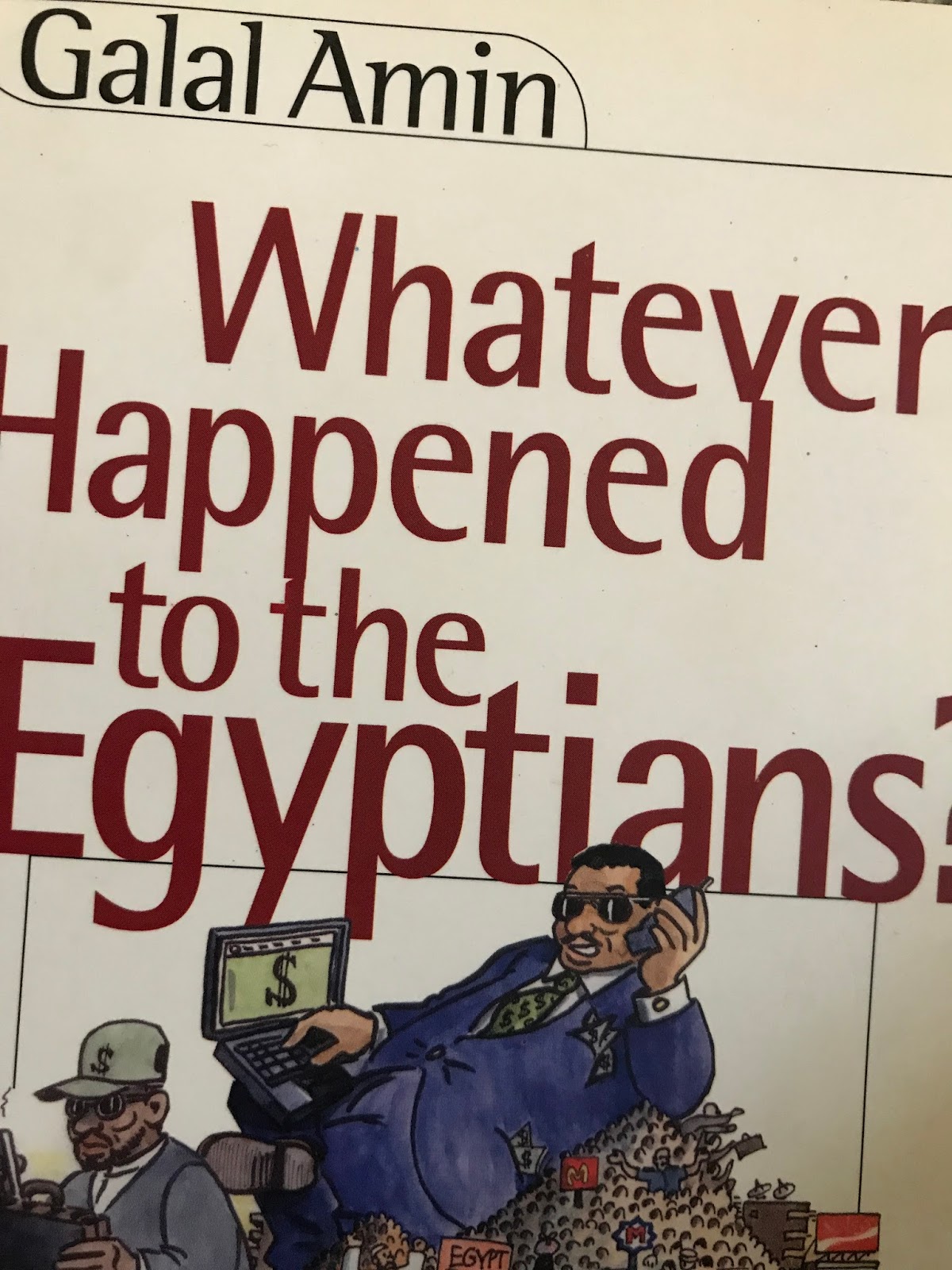
As I’ve said earlier, 2011 expanded my cultural horizons in myriad ways - and one of them was Galal Amin. Here's another excerpt from an essay of his –

The opening of the National Circus...was part of a wider scheme which included, among other things, theatre, ballet, folk art, and classical and Arab music institutes, and it succeeded in unearthing new talent and in attracting wide audiences, until the events of 1967 put an end to it.

Soon after the military attack against Egypt and the Israeli occupation of Sinai, the National Circus suffered a recession, as did many other aspects of life in Egypt. This derived as much from the depression and hopelessness felt by many Egyptians in the wake of the army’s rout…

In this general dispiriting climate, a tragic accident befell the most important personality of the circus and the most prominent member of the Helw family. A lion named Sultan fatally mauled the trainer Muhammad Helw as he stood in the ring before the audience. This was on the night of October 12, 1972, and it so happened, that the gifted Egyptian author Yusuf Idris was in the audience that night. In the tremendous shock of the event, Idris saw something fearsome in the human side of the tragedy, symbolising not only the state of the circus at the time, but also the political and social life of Egypt in the aftermath of the Israeli attack. He recorded his impressions in a famous essay…published in the newspaper Al Ahram a few days later. The essay had widespread reverberations of its own, because it echoed exactly what many people were feeling at the time. He concluded that the lion’s attack on the trainer was an allegory for the state of Egyptians of that time – fearful, defeated, their high ideals lost, and their dreams of heroism and glory destroyed.

 ~ Whatever Else Happened to the Egyptians, Galal Amin


Oh déjà vu 

The retelling of the circus tragedy totally blew me away - déjà vu a thousand shades deep! 

Flashback to mid-seventies, to my schoolgirl self growing up in Maiduguri, in Northern Nigeria. I read a Bengali short story in one of the annual issues of a children’s magazine, these were fat, hardbound books with a wide collection of children literature written specifically for the annuals – general fiction, sci-fi, whodunits, poetry, cartoons and what have you, published every year in Sept/Oct to coincide with the autumn festivals of Dussehra/Durgapuja, and lovingly sent to me from India through snailmail, which I would receive the following spring and duly gobble up. 

Anyway, to get back to the point – I read a short story in one of these jobs about a lion tamer who devised more and more daring acts to attract audiences, upping the ante till the audiences sat with their collective hearts in their mouth. The final climax of his act was putting his head into the lion's jaws and then his release upon command. And you can guess what’s coming, can’t you? - one evening the lion clamped his jaws down and didn’t release the trainer, the story ended there with this awful cliff hanger, with the trainer’s torso suspended from the lion’s fangs, thrashing around in agony. Quite horrifying enough to read, can't imagine what it must be like to watch.


For some reason, I instantly got it into my head that this story was connected to the events at the Egyptian National Circus, quite firmly convinced. Sadly, though I tried all sorts of ways to confirm the link, I just couldn’t, both the author and the title of the Bengali story have passed completely out of memory, total blank.   So the cast iron conviction turned out to be the usual modification of memory to suit the present and clear biases. Sigh...


The first man to put his head into a lion's mouth was an American animal trainer  - Isaac Van Amburgh, way back in  the 1830's, and he may have been the inspiration for the story, though he did not die of mauling - one of the few lion tamers who died a natural death. Several lion tamers got injured when they put their heads into a wild cat's mouth in the 1800's, read about one here. Circus animals quite regularly maul their trainers, the story may also have been inspired by any number of other such attacks. There have been at least two more similar incidents in the Egyptian Circus itself, Ibrahim el Helw was mauled fatally in 2004 and his wife Faten was attacked in 2015, though she survived. In spite of these maulings and deaths, the Helw family have been steadfastly working as lion trainers since the 19th century.


I tried to trace that famous essay by Dr Idris too, but no luck there either, so I went and got his novel ‘The city of Love and Ashes’ and an anthology of his short fiction. I enjoyed the short stories more than the novel, but then I always have been an absolute sucker for short stories anyway. Right from schooldays till now, I'm blaming that on those annuals.


Sunday, 24 September 2017

Malfuf wa Malik : Graffiti, Gems and Holidaymaking


Listen here to Ghalia Benali collaborating with Belgian, Iraqi, Moroccan and Indian musicians to produce a uniquely Arab-Indian-International blend of music that’s beyond mind blowing. The album is called Al Palna (Palna is a Hindi word meaning ‘Cradle’) and she is singing a track titled Hayyamatni.  (you can listen to Ghalia and Dina al Wedidi singing the same track but without the Indian instruments live in Cairo in 2013 here)


Ghalia Benali is a Tunisian singer, songwriter, dancer, design artist and performer, born in Brussels in the late sixties. She grew up in Zarzis in southern Tunisia, and returned to Brussels to study graphic design after completing high school. She embarked on her musical career in the nineties and soon climbed to fame abroad. She has this hypnotic voice, nuanced, deep and passionate. I remember reading somewhere that a soprano is not the natural range of most Arab female singers, they tend towards the alto. I haven't been able to discover why that should be so, but I am happy that it is, if it is. Just a personal preference, nothing to do with the quality of their, or anyone else's, music.

Ghalia is a self taught musician, influenced by not just the Middle Eastern greats, but the cross currents of world music that ebbed and flowed all around her in her formative years. Her mother listened to Indian and Arab music, her father favoured Western classical, she herself was exposed to Middle Eastern folk traditions and other musical ones rooted deep in the cultural fabric of her native land. As a result both the East and the West and the Middle meet in her art.

Holidays. A certain, sudden spring. And the making of both.


The Arab Spring came to Egypt in January 2011, on a day that my child returned from a school trip to Luxor. A handful of parents, just those of that particular year group, went to pick the children up at nightfall and waited and waited in the dimly lit school grounds. An empty school devoid of the happy bustle of learning and light is one of the most forlorn places to be. We rattled around, tired, impatient, bored and fed up already. The teachers texted almost continuously and conscientiously about the snarls and the protests blocking the main highways. I was probably not at my patient best.

They finally came in at around ten, three hours late. We thought nothing of it at the time, Cairo traffic has a formidable reputation in the congested department. And the airport was 50 km away from us. Then things took a scary-beautiful turn a few days later. The anger escalated, the protests continued, we were evacuated, the President fell. And returning, I saw graffiti for the first time in Cairo streets. The Revolution ultimately failed, but not before it created a lava explosion of art – visual, audio, written, performed. Watching a revolution unfold is a concentrated life lesson, whether you are a part of it or just a bystander. Two personal milestones happened unobtrusively during that time, my child spent his first night away from his mum, he and I both grew up a little, and my book of Bengali shorts was published during the Kolkata Book Fair in January 2011.


That whole year was a concentrated learning opportunity in ways more than one. Tagore’s 150th birth anniversary was being celebrated and the Indian Embassy in Cairo organised a yearlong fiesta of his works, documentaries, poetry readings, seminars analysing his life and times. I went along for as many of them as I could, obviously. One particular literary event stands out – a seminar on the poetry of ‘Tagore and Shawky’ – not only did I get to know about the correspondence between the Egyptian poet Ahmed Shawky and Tagore, I heard living, established Arab poets recite from Tagore’s works, their own works, past Arab greats, a veritable bonanza of poetry. All that year my newsfeed had translated snippets from Gitanjali posted by Egyptian friends; an Egyptian who had lived in Bangladesh stood up and declaimed a Tagore verse, impromptu, at one of the events, complete with the Bengali accent; someone sent me cuttings of past articles in Cairo newspapers on Tagore - ordinary people, not poets and intellectuals superkeen on the arts or anything. I had no idea the following Tagore had among Egyptians and I was blown away.

That year was the first time I heard of Prof Galal Amin too. He was the main speaker in one of these events.


Galal Amin is a well known economist, and has taught at both Ain Shams University and the American University in Cairo. He has also been visiting faculty at US universities. He is a serious social commentator but his essays are threaded through with a dry wit, quite delightful, while being informative and intimate.

Socially speaking, summer holidaying in Egypt has been characterized, like many other aspects of social life, by a striking dualism reflecting an obvious contrast in the way of life of the upper and lower classes. No wonder that Egyptians have coined several words based on the noun for summer season, sayf. Thus, where an English- or Frenchman would speak of "taking his holiday," the Egyptian speaks of tasyif, "summer holidaymaking," which means specifically, spending the summer at the seaside. Egyptians even have a special noun for people who spend the summer this way: mustafin or musayifin, as well as a word for the summer breeze, meaning, literally, the "breeze that comes from the direction of the sea," bahari, whose praises are continually being sung. Egyptians attribute to it the power of restoring the soul and of healing the sick, they may even entrust it with carrying messages to and from a beloved person.


~ Whatever Happened to the Egyptians, Galal Amin


As a non-Arab and a Desi, I can tell you I am into waterscapes (I was born on the East bank of a river, not far from the seas) and so I get this - Egyptians are inordinately fond of waterbodies. Most Arabs are, considering much of their lands are arid and inhospitable. So that's no surprise, all humans probably have this affinity for water, given that they...um...promptly perish without the sweet version of that commodity. But extolling a particular kind of breeze? and assigning it a postman role for  love notes? So totally charming, so Egyptian! And also - Indian.


Thursday, 6 April 2017

E is for....Enticing...


is for

El General, a Tunisian and a catalyst in the Tunisian revolution -


and since we are on the subject, listen to Elissa too, sing "Mawtini," one of the enduring Arab anthems, written by Palestinian poet Ibrahim Tuqan in 1934 and composed by Lebanese composer Mohammed Flayfel. Mawtini means 'my homeland' incidentally. It has been the national anthem of Palestine, it is the anthem now of Iraq, the tempo is faster and more of a marching vibe there. Elissa's is a slower, yearning, more soulful, rendition. Many Arab singers have sung it to this slower beat, my favourite being Omar Kamal.


Egypt!

Now what can I tell you about Egypt? :)  It’s Enticing, and its history is as mind-boggling as Syria’s.


It’s like an oddball miracle of geography that defies all possible logic – a roaring great river comes slashing across the most formidable desert on the Earth and never dries up all the way to the sea. Not only doesn't dry up, instead floods (!) and creates the most fertile soil which then sustains life for 700,000 years!! It’s just beyond all human understanding.


Egypt is too vast to sum up in a blogpost, so I’m not going to try. I will tell you instead that I have been both tourist and resident there and I have loved all of it exceedingly - some of my best travel memories and epiphanies, writing, and reading, and learning, have happened there. And I'll show you some random photographs and give you some random facts. 


And some day, when I have sufficiently got over this whole massive expat trauma-fest of the last twenty years, I might stop wringing my hands and use them instead to write an Encyclopedia on how easy it was to get enthralled with places and people that came into my life, and how difficult to say goodbye to them, even though the transience of these relationships was known to all parties from the outset. “Keep it clean: expat postings without emotional entanglements.” Yeah, I think I’ll do that :)  For now, back to Egypt.

Cairo and Nile. From the Cairo Tower at Zamalek. Once you touch/ 
drink the Nile, it calls you back - common Egyptian saying. 

Apart from the Giza Pyramids, which are the biggest and most
famous, Egypt has a 100 more. 

Water wheels, Fayoum. Water wheels were introduced here
by the Greeks, almost two thousand years ago.


Damietta. Journey's end for the Nile.


El Alamein. The War Memorials there - rows upon rows of 
twenty somethings, uff turns my brain inside out.


Luxor Temple. Mosque of Abu Haggag in its precincts. 
Continuity of worship for 3500 years.

Sunset and felucca. Aswan. 


Downtown Cairo. Meidan Talat Harb.  Traffic so pristine because
it was a weekend morning.


Sharm al Sheikh. The whole of Sinai is breathtaking.


White Desert National Park. Loved it every time. Gazillion stars 
at night. Sunrise without birdsong. Surreal peacefall.

Eastern Harbour. Alexandria. Some of the best seafood 
I've ever had in my life! 

Lone angler. Mersa Matruh. North Coast. The Med 
Sea absolutely resplendent! Oh, Arabs love angling.


Epic of Gilgamesh

This is the very first, earliest surviving epic poem. Nearly everything started in the Middle East.  Written in Mesopotamia, some 3800 years ago, about a King, and his friend; about long sea voyages and the quest for self knowledge, as all epics are in the end. Edited because this post was just getting out of control! :)


Did you know the ancient Egyptians worshipped over 1400 gods? They had gods for danger, and chores, and missing things. And each had to be placated with his/her own requirements exactly. Talk about complicated spiritual lives!


Posted for the A-Z Challenge 2017 


Monday, 27 June 2016

Dinshaway, 27th June 1906


I’ve never been to Dinshaway, some places
are like that, unvisited, widely unknown;
but when their names are taken, a line of faces
hovers over memory, as if they’re my own.


Perhaps I was among the flock of pigeons
which took the bullets for the soldiers’ sport;
I was the burnt grain; the trailing smidgen 
of smoke, the shock at the sentence of the court.


Maybe I was the wood that got hammered -
unwillingly nailed into the scaffold;
the mother’s final lament; the child’s last word;
the crowd’s last gasp at the rope’s stranglehold.


Not the key, nevertheless, a witness;
I was there when the bodies twitched, lifeless.


This is, in a way, a response poem to Cavafy's 27th June, 2 p.m. In another, it's a response to an old news story that feels like a recollection, dredged up from the deepest layers of deja vu-ness.  An 'incident' that sowed the seeds of a different Brexit. It slotted into me like a missing link of memory the first time I heard it; and it continues to move me, no doubt because there are very similar tales from pre-independent India.  I mean, that must be the rational explanation.