Wednesday, 19 April 2023

Quandary

First off, let me tell you Q is not a quandary in Fiji. Yes, you read that right. Not. A. Quandary. Nope.


That’s because Fijian uses the Latin script, there is a Q in it. And there is no rule about U following Q but not being pronounced because Q anyway has a U as part of its pronunciation, I mean how weird strangely complicated art thou, O English, really? 😊


But...um...never mind. In Fiji, I can tell you about any number of things starting with Q. Before that, take a quick look at the way the Latin alphabet has been adapted for the Fijian language. 


(Although...there is no X in the Fijian alphabet! OMG, should I have a breakdown now or should I leave it for later?! Okay, let’s take one letter at a time. Sufficient unto the day is the quandary thereof...) 


With Q we are actually spoilt for choice, where to even begin? I could tell you about Akupasi Qera, who is a professional rugby player - rugby is the cricket of Fiji (baseball? - if you're reading from USA) and players are superstars. Or about Adi Litia Qionibaravi  -  she is a Fijian chief and a former Member of Parliament. Or Apimeleki Nadoki Qiliho who made church history by being ordained as the first indigenous Fijian bishop.


I could tell you about Quwawa, which the Fijians believe have medicinal properties. It can be used to treat stomach ailments and for hangover relief. So if you've had one too many, you could totally try a tea made from Quwawa leaves. That is aka Guava in English. 😉


Or for instance any of the settlements - there's Qereqere, Qauia, Qalito Island aka Castaway Island, Qarani and more...see what I mean? 


And of course, Qia which is the Fijian traditional art of sacred tattooing, lost with the conversion to Christianity and now being revived without the spiritual obligations. 


But honestly I'm not getting into details of those, because what I really want to do is to show you some photos of Queens Road. 


Queens Road. Getting into Lautoka from Nadi. The speed
limit in large towns is 60 km/h. As you approach villages
it's even lower at 50.


This is a coastal road that links Lautoka to Suva through the Southern side of Viti Levu,  it passes through the international airport at Nadi, Sigatoka and the Coral Coast. Here's a screenshot of the route. 


Map of Queens Road linking Lautoka, the second city, to Suva, the capital of
Fiji on Viti Levu.


In many places the road hugs the Pacific and in others the waves are visible. All through the drive, the presence of the ocean can be felt. 


The ocean is never far. Queens Road near Korotogo.


On one side the mountains, on the other the breathtaking blue of the Pacific on
a fine day. In between, the purr of the engine and the turning wheels. The
journey is the destination.


As I said, the ocean is never too far.


The road dips and rises and affords a glimpse of blue from many angles and many places. Sometimes behind, sometimes in front. Sometimes swishing in her foaming broderie Anglaise underskirt right alongside.


Spot the guardrail and road signs - you'll be able to appreciate how the road
nestles between the mountain and the ocean. 

I've never quite understood why the Ancient Greeks visualised Oceanus as male, so much more feminine than masculine - the repository of primal life, coaxing the sun's energy into rain, the resting place of all rivers, the starting point of continents. Its very form encircling, fluid, all-encompassing, all-accepting. Its rhythms eternal and cyclical, mostly placid and patient with earth’s children, occasionally having a totally terrifying mega meltdown when pushed beyond limits. Does that sound like a male to you? Nope, I thought not. 


Road repairs going on. Again, a clear picture of how close the ocean and
road are. At Vatukarasa. 

The road from Lautoka to Suva stretches for 218 km and takes around 4-5 hours depending on the traffic and road conditions. 


Sunset on the Queens Road. Somewhere near Natadola. 


Somewhere near Navua. I'm standing just a few steps down from the car.

The max speed limit on it is 80 km/h and given that it is single lane in many places it is hard to break any limits. On the other side, i.e. from Lautoka to Nadi the character of the road changes. The Pacific is still there, but is hidden by the undergrowth or sugarcane fields, revealed in flashes between buildings and trees and waving grasses. In places the road recedes inwards into the land, skirts around the Nadi international airport and then carries on. 


Going towards Nadi from Lautoka on a cloudy day. More mountains on view,
but the ocean's there too somewhere close, off the frame.

It was originally a gravel road with a steeper gradient, located farther away inland, longer and far more challenging to negotiate. It used to take the entire day to travel between Lautoka and Suva, and the wear and tear on the vehicles was staggering. 


Just a tiny glimpse of the waters under a point off the middle of the rainbow
to the right. Near Viseisei. 


Travelling in the old days, the passengers arrived exhausted, laden with kilos of dust.  I was told this by a local transporter who was a child when the surfaced road was built.  It was called Queens Road after the 'original' queen, i.e. Queen Victoria and not Elizabeth II, he said. I can't find a way to fact check this.  :) But it feels okay not to, to take him at his word.


As the road gets into Lautoka, there are these ancient Persian Silk trees,
reportedly planted by the Girmitiyas 150 years ago when they first landed. 
Again, I haven't been able to verify this but the trees certainly look
jaw dropping impressive. 


The new surfaced road was constructed during the mid 70s and opened in 1976. Read about that here. The last line of admonition from the then Governor General is quite sure to make you smile. 


Credit.  The new road being constructed in the 1970s. 


All this month I'll be writing about Aspects of Fiji, which is where I'm staying quietly put at the mo. And where the sum of its quaint parts is greater than the whole.


Did you know that 46% of shares in the national carrier of Fiji - Fiji Airways, is held by Qantas? Another 52% is held by the Fijian government. Air New Zealand and the governments of other Pacific nations hold minor shares. The airlines began life as Air Pacific and was initially acquired by Qantas in 1958. It was rebranded as Fiji Airways in 2012. Read more about the airlines here and here. 


~ Thank you for reading ~


Posted for the A-Z Challenge 2023  

Tuesday, 18 April 2023

Write... Edit... Publish... April 2023 : Life is Beautiful


If you're here looking for my A-Z post, that's P for Palm...click here.


It’s April and there’s the A-Z and the WEP, embarrassment of riches! - and I have family visiting from India here in my home-from-home in magnificent Fiji, so life is indeed beautiful – also busy right now. I’m a sliver over the word count. I truly tried to wrestle it down but it’s the best I can do under the circs.


For this challenge our prompt is based on the Roberto Benigni award-winner Life is Beautiful. I am continuing the story that I started last December, this is the 3rd part, read the other two parts here (Chiaroscuro I) and here (Chiaroscuro II : The Evidence in Black & White). For those who don’t have the time to read previous entries, here’s a brief synopsis -


Chiaroscuro I – The MC finds a B/W profile picture on a social media platform intriguing. He writes on an impulse to the woman and finds that the picture is of her grandmother and was shot in a studio that once belonged to a relative, now dead.


Chiaroscuro II : The Evidence in Black & White  – The MC goes back to his hometown and explores the derelict studio. He finally comes upon a series of nudes of a woman in different stages of life, the last of which he recognises as the grandmother.


Optional Reading

For those unfamiliar with Indian culture and mythology, a few words about the context of the next installment:


1) India has a hierarchical caste system, loosely based on professions, from thousands of years ago. While it was done away with in the Indian constitution, intermarriage between the castes, between a so called higher caste and a lower one, was taboo and stigmatised during the mid-20th century. 


2) Samudra, Arnab and Sagar are Indian names for males, originally from Sanskrit. They all mean sea or ocean. 


3) 'Samudra-Manthan'  means 'the churning of the ocean' and is an important mythological tale where the primal ocean was churned by gods and demons and yielded both treasures and toxins. 'Amrit' was the elixir of immortality, 'Kaustubh' was a gem,   both were among the treasures dredged up in the churning. 


Chiaroscuro III : Colour it Beautiful


I put down the photographs and scissored my hands into the envelope - folded paper, smaller than the  enlarged prints, a couple of sheets. Expensive, thick, suede finish. The kind that was used to write letters on decades ago. I opened them and smoothed them out.


“Dearest,

I am being locked up. I cannot come to you. Ruby has agreed to deliver this. I am not allowed too many visitors, but I guess refusing them all also looks suspicious so they are suffering one or two of the neighbourhood girls to call on me. It is a challenge to slip her the letters, but this is the only lifeline I have left.


I have loved you for so long that I can’t remember a time when I didn’t. I really can’t remember a time when your voice in the front room didn’t make my heart race. The sight of you and my brothers sitting at your games of carrom brightened up my evenings. None of you took any notice of me – go  away and find something else to do, what’s an unruly girl doing here among us, don’t be a pest, get us some tea…


You came and went during the festivals, for the rehearsals of the amateur theatre group, for the dumb charades, for the evening addas during the long summer breaks. I hovered everywhere without anyone catching on.


Things changed the day I found you and my brother smoking in the small room off the terrace. You both had graduated, you’d already joined Bourne & Shepherd’s. I had grown up too, I no longer looked like the pest you knew, no more a tongue-tied twelve-year-old girl in two tight plaits and a shapeless frock thrown on anyhow.


I had retreated to the terrace upstairs hopping mad because Father had summarily dismissed my request to get admitted for higher studies. I’d gone there to lick my wounds and regroup for the battles to come.


I had got a place in the best institution in the country! Yet the family refused to even listen, because I was a female, how illogical!


You’d smiled thoughtfully and slowly came up with options. It was pleasantly surprising that you didn’t parrot the elders’ lines. In the end, I did get what I wanted. I always do.


We met quite often after that, in the room off the terrace, sometimes out in the open among other people where we could just blend into the crowd. My brother figured somehow, he wasn’t best pleased.


He tried to warn me off. They’ve given in on the college, alright, they’ll never agree to an inter-caste marriage, if you think that, you’re less smart than I thought. A non-Brahmin, a professional photographer without two pice to rub together, what are you thinking of Sis?


We think that Independence means change, along with the imperialists we have thrown off the centuries old rotten systems, all is fresh, all is new, we can chart our own course as we please. In some ways, we can, we are. But the social divisions, they are not going to change just because the Union Jack is gone. 


I’d told him to keep his opinions to himself. I’d won one battle, I’d win the next too.


So I knew from the start that this was going to be rough. I’d have to fight for every inch of ground. But what I have, what we have between us is worth fighting for.


I don’t know yet how I will do this, but I will give birth to our child. I will name him Kaustubh if he is a boy, Amrita if she is a girl – the supreme treasure of my own Samudra-Manthan.


It does not matter if we can marry or not. I can’t be any more married to you than I am now. It does not matter who they might marry me off to. And whoever it is they trick or cajole into being the groom, he will possess neither my body nor my heart.


Life doesn’t feel beautiful right now, dearest, but I swear to you, I swear by all that is holy, it will be. It will be beautiful again, no matter where I am and where you are.


Yours, and yours only


It ended without a signature.


My brain turned into a tangle of jumbled, writhing thoughts, pulling in different directions. Calm down. Calm. There was an unborn child. All this letter proved was that Sam and the lady were in a relationship when it was written.  What about the photographs then? Surely they meant the relationship had continued beyond the letter, exactly as the writer had sworn it would.


I had wanted to connect a few dots. What I’d got was a bombshell instead. I wasn’t sure how welcome it would be either to my family or to yours.


***

Slightly anxiety inducing call  - too many horror stories of online friendships falling flat the moment an effort was made to meet offline. It was evident you felt no such qualms though, you were easy, confident.

“ How am I to know you? You never change your profile photo, it’s still your grandmother on there?”

“Ooh, shall we wear matching exotic orchids or something on our lapels?” There was always laughter lurking behind everything you said.

“No, seriously. How are we to recognise each other?”

“Don’t stress. I’ll find you. Your profile pic is bang up current, isn’t it? Unless, you’ve grown a beard recently?”

“No, I haven’t.”

“Cool. By the way, folks say I look like my grandmother. So you’re not as much at sea as you think.”

When you removed your sunglasses and sat down opposite I saw exactly what you had meant. 

“Tell me about your grandmother.”

“She was quite a character, actually. She fought her menfolk, you know, very conservative stubborn macho types in those days, went to study in Presidency. The first woman graduate in her family. Didn’t take any nonsense from anyone, did exactly what she wanted and how she wanted. My grandfather always deferred to her opinions. Quite the matriarch.”

“How many children did she have?”

“Four. Three sons and a daughter.”

“What’s the first-born’s name?”

“Kaustubh. Then my Aunt, she’s called Amrita…are you okay?”

“Yeah, fine...go on..”

“The last two brothers are Arnab and Sagar – that’s my father. She used to say that her offspring were the treasures from churning the oceans of life…her rewards for her own personal Samudra-Manthan…”


~*~~~*~~~*~


WC - 1080

FCA


Read the other entries here.

Palm

For my WEP post for Life is Beautiful...that's Chiaroscuro III...please click here. 


Fiji has palms. Everywhere. A lot of palms of various kinds. Palms at Denarau.

Fiji has rather a lot of palms – there are 25 different species that are native to Fiji’s forests. One of them has been profoundly important in the development of Fiji as a nation, and continues to be vital at present too in newer, innovative ways. I'm referring to the Coconut Palm, grown extensively in the 19th century in plantations and now forming the raw materials for a Fiji owned, sustainable, ecofriendly South Pacific furniture company with clientele round the world. It's called Pacific Green but it started life as Post & Rail in 1973. Read about their history by clicking this link here. 


Pacific Green produces Palmwood from mature, felled coconut palms - the waste product from spent plantations. Around 70 million of unproductive palms end up in landfills around the world. Palmwood is a registered trademark and has been developed after 25 years of R&D, it is positioned as a sustainable alternative to old growth rainforest hardwood. 


Post & Rail was rebranded to Pacific Green in the 1980s and operations started first in Papua New Guinea and then in Fiji where the first factory dedicated to R&D in spent coconut palms was set up. They expanded internationally with the first outlet set up in LA followed by others in Asia. At present, the company is listed on the South Pacific Stock Exchange and the major shareholders are the Fijian people. 

More Palms. Lautoka. 


Their tagline is "Save the forests, use palmwood." Palmwood has been used as an architectural material in Masdar City in Abu Dhabi. Personally I find their designs rather unique, sometimes a little quirky, they appear to fit into their spaces seamlessly and create a great South Pacific vibe. I've seen their furniture in the major hotels and the rental property I am at is furnished almost exclusively with locally handcrafted palmwood furniture.  They are very comfortable if a bit difficult to move around because of the weight. A smooth, even golden grain without the typical knots of regular wood, whether that's preferrable to the natural blemishes depends on individual taste. I like the grain and knots that nature makes, but would totally buy Fijian palmwood if I were staying here long-term and/or had to furnish my own accommodation.


Palms and pools at low tide. Wailoaloa. Nadi Bay. 


The other company with a similar environmentally conscious, socially responsible, sustainable resource-use philosophy that should be mentioned here is Pure Fiji. They use plant products and extracts to manufacture a range of rather luscious skin- and haircare items. My first intro to them was through the travel kit Fiji Airways provides its passengers - one item was a little washbag with single use packs of their lotions and balms. Find out about Pure Fiji here. 


All this month I'll be writing about Aspects of Fiji, which is where I'm parked at the mo. And where the sum of its photogenic parts is phenomenally greater than the whole!


Did you know that Fiji is among the top South Pacific island nations producing pineapples, (discounting Oz of course)? It produces around 8500 T of pineapples annually. And I can tell you from personal experience they taste pretty good! Papua New Guinea happens to be the leader in South Pacific with a production volume of 24,000 T. The other P-fruits here in Fiji are Pawpaw and Passionfruit. All greatly delish! 


~ Thank you for reading ~


Posted for the A-Z Challenge 2023  

Monday, 17 April 2023

Orchids

 ...well, yeah, they are the obvious choice, no two ways about it! This is going to be 90% piccies and 10% words.


I'm just going to mention Raymond Burr, we'll come back to him later  again...and I'll say a word about the Garden of the Sleeping Giant, which houses a astounding collection of the flowers. 


The Garden is a short drive from Nadi, it's not just orchids, there are massive ancient trees that take one's breath away, lily ponds, picnic areas, and a gentle climb to a look out with gorgeous views. 


An overwhelming yes vote to visiting. 


But you don't necessarily have to go off to a botanical garden to see beautiful flowers. All of Fiji feels like a lush garden!


In Denarau Island after a rain shower.


Outside an ordinary supermarket.


All this month I'll be writing about Aspects of Fiji, which is where I'm at the mo. And where the sum of its outstanding parts is greater than the whole!


Did you know that for 3000+ years of its history, Fiji maintained a tradition of oral storytelling to preserve its origin stories for the largest chunk of three millennia? Origin stories were told and retold across generations and written down only in the last 200 years, after the European missionaries came to Fiji. Some of those early oral origin tales have been borne out by subsequent archaeological findings. More on that here. 


~ Thank you for reading ~


Posted for the A-Z Challenge 2023  

Sunday, 16 April 2023

Nature

National Trust of Fiji is a statutory body dedicated to the conservation of Fijian public natural and historical resources. It lists nine sites/projects under its direct oversight and management. That includes a sanctuary for Fiji's native Iguana, the first Fijian national park at Sigatoka. Find out about the work the Trust does by clicking on the link here. 


Fiji has a variety of terrains - rainforest, mountainous and flat, coastal plains. 


Nature Fiji - Mareqeti Viti is the only domestic NGO working towards the conservation of Fijian natural heritage. Read about the initiatives they are working on over here. 


Fiji signed the Convention on Biological Diversity (CBD) alongside 190 countries at the Earth Summit in  Rio de Janeiro Summit in 1992. The first National Biodiversity and Strategy and Action Plan was developed in 2003. A revised Plan is now in place covering 2017-2024 devised by government. Read the National Plan for more details. 


There are on-going challenges of course. Though Fiji's landmass has a forest cover of 50 % still there are threats of illegal logging and insufficient legislation for land and development management. Over fishing poses a threat as well in the marine and inshore habitats. Several hundred of native species are under threat and local skills as well as awareness needs supplementing. Fiji is also at the frontline in terms of climate change and faces urgent threats from unpredictable weather patterns and sea level rise.


Fiji is a nature lover's paradise.


All this month I'll be writing about Aspects of Fiji, which is where I'm at the mo. And where the sum of its parts is naturally greater than the whole!


Did you know that there is no capital punishment in Fiji? Fijian law abolished the noose totally in 2015 for all crimes. Before that it had done away with the death penalty for ordinary crimes in 1979. Read more about that here in this newspaper report. 


~ Thank you for reading ~


Posted for the A-Z Challenge 2023 

Friday, 14 April 2023

Masi


Masi is a type of textile, it is bark-cloth made from the inner bark of the paper mulberry tree (Broussonetia papyrifera). Like whale ivory, bark cloth too has a significance beyond just clothing. It is used for ceremonial occasions like weddings and funerals, given as gifts as a mark of respect and esteem, hung as a tapestry for major meetings and gatherings, restricted mostly to the chiefly classes. 


Each of the Fijian clans have their distinctive motifs. While the cultivation of the tree is the men's domain, the making of the cloth from the inner bark and producing the finished design is the creative work done by women, the skills passed on from mother to daughter. Masi is produced through out the Pacific,  it is called tapa in Tonga and has other local names in the other islands. However, production has declined or stopped in many places but Fiji still preserves and carries on the traditional methods of Masi making. 


Credit


The trees are harvested at around 9 months and handed over to the women. Traditionally,  the tough  outer bark is stripped with the teeth to expose the inner white, softer one, which is delicately lifted away with a knife, and rolled into coils. The strips of white bark are soaked and pounded with special Masi making wooden mallets till they become pliable. Then they are laid overlapped with each other and beaten again till the fibres mesh together to form a whole. Finally, the raw edges are trimmed and they are sundried to form a fine cloth. 


Stencils are used to decorate the Masi in distinctive geometric patterns. The stencils were traditionally made from banana leaves, but nowadays more durable materials are used. The dyes however remain the same, usually black and brown, though other colours may occasionally be used, derived mostly from terracotta clay, specially prepared soot and mangrove sap. Watch this video on the process of making Fijian Masi.


The very first time the Masi motifs caught my eye was on the flight in. The Fiji Airways logo and decorative elements on their aircraft, as well as those on other items for inflight use, air crew uniforms, and ground equipment, all have typical Masi motifs. Very Fiji, very distinctive, very fetching the brand vibe they create. 


Masi motifs on a Fiji aircraft. Nifty or what?


Fiji Airways logo and decoration at a check in  countert.

These designs were adopted with a brand refurbishment around ten years ago. Unfortunately, the Masi artist who designed the brand logo, Makereta Matemosi, passed away recently. She was only 54 years of age. Tragic!


Credit. Makereta with her Masi for Fiji Airways. 


All this month I'll be writing about Aspects of Fiji, which is where I am at the mo. And where the sum of  the constituent parts is marvellously greater than the whole! 


Did you know that the name 'Fiji' is a result of a mispronunciation? The indigenous Fijians called their homeland 'Viti' which the first Europeans encountered at Tonga during the voyage of Captain Cook. The crew misheard the Tongan's pronouncing 'Viti' as 'Fisi' and that is how Europeans came to call it Fiji.


How can I write about a culture and not include their music? Fiji is steeped in it - did you know that an oral musical tradition called Meke is the way Fijians preserved their history? Meke is a performance of song and dance that uses the lyrics to tell stories - transmit their legends, origins, practices of war and worship of spirits. It consists of the singers and percussionists sitting on the ground and dancers in traditional costumes performing the dance movements. Watch a video of a Meke performance at the International Dance Festival  below:


~ Thank you for reading ~


Posted for the A-Z Challenge 2023  

Thursday, 13 April 2023

Lapita


Credit


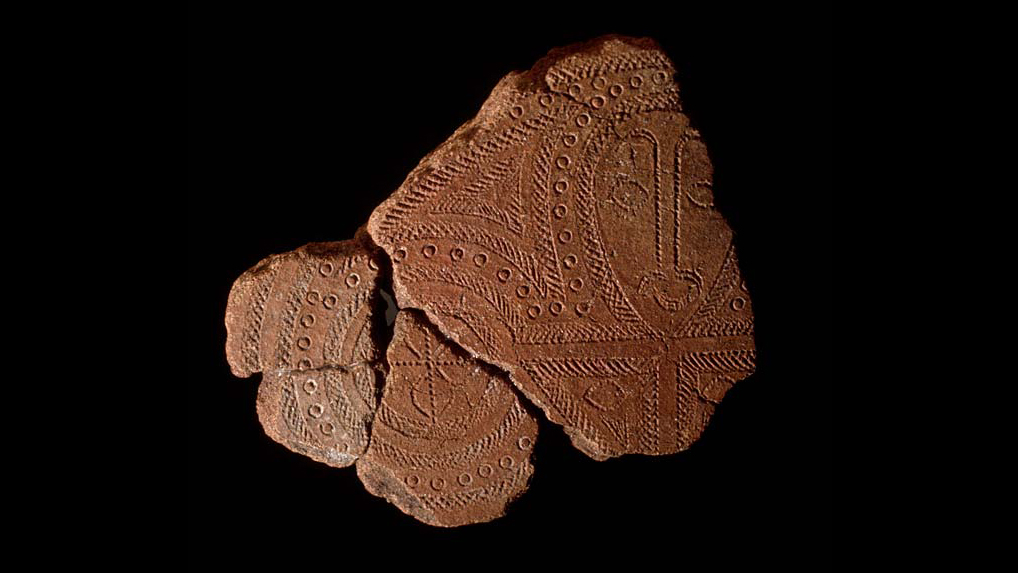
As I have written here for a previous A-Z year - pottery is the very earliest marker of humans, we have learnt to shape clay much before we learnt to sow seeds or spun wheels. Way before the invention of writing and language made it possible to keep records or transmit our feelings to others via words. Pottery is so ubiquitous that archaeologists use the analysis of its constituent materials to tie peoples and cultures together, such as Painted Grey Ware culture, Northern Black Polished Ware culture and so on. Look back far enough, dig deep enough and you'll always find some form of pottery to tell you about the lifestyles and belief systems our ancestors followed, what they ate and loved and celebrated. 


The ancestral Fijians who arrived 3500 years ago, are characterised by the use of a pottery type called Lapita Ware and are a part of the Lapita culture. Some archaeological evidence is found in a place called Lakeba. There are other major sites in Sigatoka on the coral coast. Click the link to listen and read about Lapita pottery from the Fiji Museum. I personally loved that decorative edging of dancers holding hands and rocking to the beat of some ancient music, maybe round a fire late in the evening.


Lapita ware takes its name from the first site it was discovered at in New Caledonia - a group of islands to the South West of Fiji. While the debate is still on about where exactly Lapita pottery originated, archaeologists now know that beginning 1500 BCE the makers of Lapita ware started moving eastwards through the Pacific. So the ancestral Lapita peoples originally came from somewhere in South East Asia and gradually migrated and peopled the South Pacific - Micronesia, Melanesia and Polynesia. 


The pottery is distinguished by its typical dentate designs and repeating geometric patterns. The first excavations were carried out in the 1950s and since then hundreds of sites have been found across Tonga, Fiji and Samoa. Read more about those here  and here. The last has a very interesting video on how the Lapita peoples moved through the Pacific. Alternatively, watch this one, equally fascinating and illuminating, below:


The pottery making traditions still survive in the villages of Fiji today. Learn more about how they are made by clicking the link here. 


All this month I'll be writing about Aspects of Fiji, which is where I'm at the mo. And where the sum of its lovely, lush parts is greater than the whole!


Did you know that Lautoka is the second city of Fiji, after the capital Suva - traditionally a major sugarcane centre (it's called the Sugar City, duh!) and a commercial hub? The main sugar mill was built here in the early 1900s by indentured workers from India and Solomon Islands for the Colonial Sugar Refining Company and it is still the major employer. Other industries include timber milling, garments, steelworks, paints, construction, brewery, jewellery and fishing items. 


Saweni Beach at Lautoka on a lovely clear day. Lautoka port is the second
largest port in Fiji and handles sugarcane and timber exports.


The Western Regional Library at the City Centre next to the Law Courts. 


Lautoka City Centre. Court's with Diwali lamp cut out during festival season.
Lautoka has a large concentration of Indo-Fijians so Diwali is an important
celebration. 


Aaaand...just a little note to let you know I'm super pleased to have family visiting from Lucknow, a long way away in India, so I will be a bit late with my replies here, but I'll soon be back and catch up with you after they leave.


~ Thank you for reading ~


Posted for the A-Z Challenge 2023 

Wednesday, 12 April 2023

Kula


Kula is the Fijian name for the Collared Lory, its national bird. The scientific name is Phygis solitarius and it belongs to a group of old world parrots. It is a bird of the rainforest that has adapted to urban environments and can be spotted in Suva. 

Credit. Kula or Collared Lory.

The bird was prized for its vivid plumage through out Fiji, Samoa and Tonga - its scarlet feathers were traded across the South Pacific and used in ceremonial dress and mat edgings. (Nowadays replaced by wool).


These parrots are around 20 cm in size and an adult weighs an average of 75-85 g. It is a native of Fiji and also endemic to the Lau islands. It feeds on fruits, seeds and small caterpillars. It has a distinctive two note screechy call - listen to that by clicking here. 


It also gives it name to a wildlife park at Korotogo on the coral coast near Sigatoka. The Kula Wild Adventure Park is a nature park popular with visitors. It is a wildlife facility that preserves both the flora and fauna of the Fiji islands. Privately owned and operated, it positions itself as a family attraction with something for all age groups. The park has established captive breeding programmes for Fiji's endangered species, particularly the Iguanas, and acts a shelter for several rescued Red Breasted Musk parrots. There is a small aquarium with displays of live coral and marine molluscs found in Fiji. A pool with the resident Hawksbill turtles. Water rides for young visitors and a small café with a basic menu. 


The raised walkway through the rainforest setting. 


There is also a raised wooden walkway through the rainforest which I particularly liked - the entire park has humongous trees clearly labelled with both the local Fijian name, the botanical nomenclature and their uses/significance to the culture. Nice little nooks and crannies with benches to sit on and soak up the tranquility. A little rope bridge that gets you nowhere, its entire purpose is for you to step on its swinging, delightful self. What's not to love, right? The park has promoted knowledge about Fijian wildlife, conservation and environmental issues through free classes for school kids. 


Hawkbill turtle at the Kula Park.


It was established in the 1980s originally as a bird park and expanded to its current state in the late 1990s. It works with a number of partners in conservation such as  National Trust of Fiji, Endangered Species Recovery of San Diego and Zoological Parks Board of New South Wales. It is also an honorary associate of Royal Zoological Society of South Australia.   


It takes about 11/2 hours to get to from Nadi, just after crossing the bridge on Sigatoka. As with most Fijian attractions, there are no bells and whistles. A few things could do with refreshing and/or a coat of paint. But don't let that put you off. The approach road off the main is gravel for a few hundred yards, but don't be put off by that either. It was a crowded weekend when I was there, there were quite a few children and they all seemed to be having a whale of a time. It's not exactly the London Zoo, but it's worth checking out if you are in the area. 


All this month I'll be writing about Aspects of Fiji, which is where I'm at the mo. And where the sum of its key parts is greater than the whole!


Did you know that there are two different species of Iguanas native to Fiji? Both are endangered, the Fiji Crested Iguana is critically endangered. There are another 100 marine species in Fijian waters which are also endangered. The situation as quite as bad on land as well. However, Fijian conservation efforts have been going on for decades now and several captive breeding programmes have been crowned with success. 


Posted for the A-Z Challenge 2023