Wednesday, 1 April 2020

A is for...April...n...A-Z...


A lot has happened since the sign-up and the Theme Reveal! Hope everyone is keeping safe distance and doing well. As in the other years, starting off my A-Z with some music, here are Agnee and All the Fat Children, two indie bands from India.


And here is a collaboration between A.R. Rahman, possibly the most famous contemporary Indian on the world music scene and U2 - Ahimsa.


Welcome to the A-Z Blog Challenge 2020 going on all April, where I'm posting about India in 26 Objects

Monday, 16 March 2020

A-Z Challenge 2020, Does This Look Like a Theme?


Hello, all ye who click on to here! Welcome to the A-Z Theme Reveal, where I am struggling to reveal what I am planning to pass off for a theme this year. Life has been a bit crazy, I’ve been, well, preoccupied watching news videos in a mindless loop…so. Really, this post-truth world does not suit my constitution, no pun intended.


Anyways, the upshot is, when the sign-up post suddenly flashed into view on the A-Z site, whaaaagh…no inkling of a theme! I signed up pronto (I mean, have you seen the colours on that badge?! who wouldn’t?!) But not one clue on the theme, a most panic-inducing situation.

Monday, 9 March 2020

not really fond of capitals


when I think of it, I'm not so fond of capitals -
okay, maybe a couple, maybe half a dozen
at the most, there's home of course, goes without saying,
and some more around the mediterranean

but not those shouty ones that stand guard with their arms
at attention before each stanza, each sentence,
why must they be so strict about marking the start?
is it so clear always - the beginnings and ends?

do you know where this thought stopped and that one rose
like a mist from the waves? the horizon and sea
merge so often into one, but in any case
one's fluid and the other's imaginary.

go look for the end, there's no clear line in the sand
just a band of wetness between the sea and land.


Saturday, 29 February 2020

Daily celebration


I did not bring up love this month, because
it felt improper to mark the personal.
The inside jobs of lawmakers and laws,
burnt tyres, broken arches - a huge betrayal
took up all the space. Smoke and vitriol
fogged every screen, an ineffable loss
in the arcs of batons and gun barrels,
shattered glass, smashed promises strewn across


the city. But then you should not equate -
this glancing away, maybe a brief silence,
a preoccupation with the external –
none of these you should consider equal
to change, and certainly not indifference.
Love’s still something I daily celebrate.


Happy birthday, Baba.

And you might enjoy looking back at this as well.


Sunday, 23 February 2020

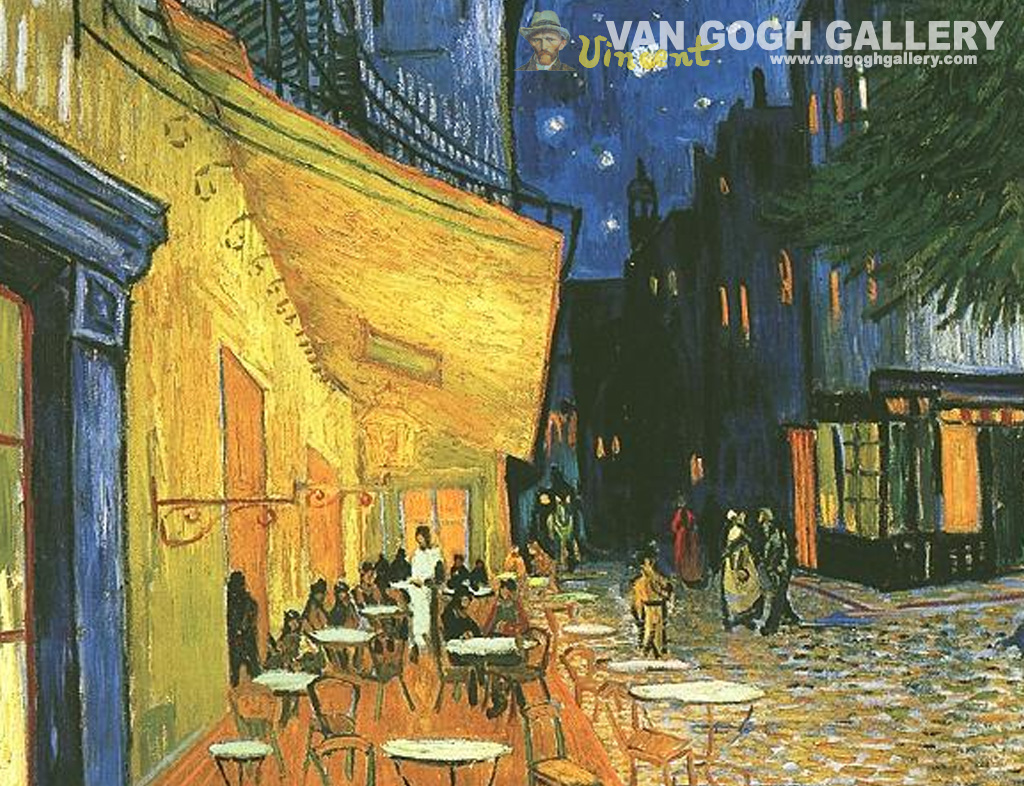
A Short History of Cafe. Terrace. Alfresco. Street Lighting. Pigments. And Nocturnes. Part II


Continuing the entry from Wednesday...read the first part here.


Credit


The Oxford students took coffee to London as well, where coffeehouses gained widespread popularity as Penny Universities because all kinds of subjects were discussed by men from all walks of life. No women allowed in though. The ladies soon set up a petition – complaining that coffee decreased their men’s virility. Men fired back a vigorous and somewhat explicit rejoinder.

Wednesday, 19 February 2020

Write...Edit...Publish...+ IWSG Feb 2020 : Cafe Terrace


It's time for the inaugural post for the year at WEP, but it's not any old year. WEP hits a major milestone in 2020, the tenth anniversary, wow! We've come a long way together, WEP and M-i-V. I can't believe it still, the way time flies. Thank you, Denise and WEP, for the badge and the fun and the learning.

I've been a bit ambitious with this prompt and spectacularly failed to trim my post to the required wordcount, so it's broken into two parts. The first appears for this challenge, the concluding part will go live on Sunday. 


A Short History of Café. Terrace. Alfresco. Street Lighting. Pigments. And Nocturnes. (Part I)


So I could have told you how I went to MoMA without checking, unpardonable! - and found it closed for renovations. No shufti at a famous Night, no nibbles at Terrace 5. But I won’t. Let’s begin at a different point, away from the nights, away from shuftis, and most of all, away from me. Bored with staring at millions of my own reflections in the sheesh mahals of my mind.  Let’s start with…this mug beside me. With café. Which is the French word for coffee  - absorbed into other languages to sometimes mean the beverage and/or the place where it is drunk.

To do good work one must eat well, be well housed, have one's fling from time to time, smoke one's pipe, and drink one's coffee in peace.

~ Vincent Van Gogh

Coffee. It’s another religion started and propagated by Arabs which took on a life of its own, left them behind and happily traversed right round the world. Just like the other one did. Every single country in the world consumes coffee, I kid you not. And clearly coffee has done relatively better for itself than the other faith propagated by Arabs,  it’s bagged more converts and has less phobia and misconceptions attached. But it wasn’t always so. Coffee’s got enough bad press in the past, down to 17th century ladies in London protesting it was an anti-Viagra kind of stuff, if you know what I mean. But I’m getting ahead of myself.


Things kick off around 850 CE in Ethiopia. Because you know, all the good stories start in Africa. A goatherd – yes, all good stories will also have an animal flock tucked in somewhere – well, a herder called Kaldi notices his flock ‘dancing’ after they’ve munched on some berries. He takes the berries to a monk, who disapproving, throws them into the fire, whereupon issues the most delicious aroma. Other monks come to investigate, retrieve the roasted beans, grind them up and brew the first mug of coffee. This is the first reference, in a book written by a Lebanese professor of languages in Rome in 1671, of the origins of coffee. And since it is almost nine centuries that Kaldi and party have proceeded to the great café in the heavens, this is taken to be apocryphal, a legend. Except in Ethiopia, where it’s treated with due seriousness as history and where both Kaldi and The Dancing Goat are two popular names for cafés, with or without terraces.


***

Talking about terraces, I could have told you too, about their role in my childhood. The first hailstorm I watched happened on one, a small internal terrace filling up with hailstones one winter in front of my five year old, delighted-astonished eyes. About sleeping on them on summer nights on charpoys - all of Delhi did that in the 70s and 80s, don’t know if air pollution, crime and sophisticated, modern lifestyles allow that anymore?


Terraces go back much further than cafés. In architecture, they happened with the building of the first shelters. There’s archaeological evidence from ancient settlements dotted around the Levant, the oldest one dated to Palaeolithic times. Somewhere south of Haifa in Israel is a village consisting of a cluster of 12/13  subcircular houses set on artificial terraces, constructed around 10,000 BCE. Clearly, humans have always enjoyed sitting around outdoors and sipping whatever beverages were in vogue, from the earliest hours of civilisation. And alfresco dining is thought to have originated with a quick filler of baked pastries and meats before people set off on hunts in medieval times. Which then developed into more elaborate picnics by the 18th century, as pleasure gardens, public parks and outdoor spaces were developed. But eating outdoors for pleasure or as a leisure activity was restricted strictly to the upper, more affluent classes. The peasant farmer, the fisherman, the shepherd would naturally eat their slice of pie out in the open, but that came with the job. In the early 20th century, the automobile sparked off a sea change in lifestyles as more and more people could travel further afield. Day trips became part of the repertoire of family activities and work groups, picnicking boomed. The accessories available also became more elaborate and so the hasty baked pre-hunt snack of medieval times became a full-fledged formal meal taken outdoors. Okay, now back to coffee.


From Ethiopia Arab traders brought it to Yemen, where it caught on with the Sufi monks – they drank it to stay awake through the nights. The Arabs called it qahwah – that which prevents sleep. Qahwah became popular with ordinary folks too, especially during the month of Ramadan, when people stayed up deep into the nights for prayer and entertainment. Mocha, an important trading port in Yemen, became a focal point in the coffee route. By 1450-ish, the Ottoman Turks had  taken coffee to Istanbul  where the first cafés, called qahwah-khane, opened. From there it was a small step to Cairo and to Mecca. The qahwah-khanes became a focal point where people gathered not just to drink coffee, but also to discuss, debate, write about the hot button topics of the day. They became so popular that the Governor of Mecca abolished them fearing the vigorous discussions and dissent would disrupt his rule. Unrest broke out far and wide,  the Sultan was finally forced to intervene. He restored coffee to the public and order in the empire. Coffee was thus established in the Muslim world. Up to late 16th century cultivation was kept a closely guarded secret. Exports of fertile beans were prohibited.


However, a subcontinental chap smuggled back some beans after a pilgrimage to Mecca in 1600. Coffee cultivation  thus started in India. And in Europe, coffee made its way through trade first to Venice. Later the Pope took a sip and became a fan.  The first settlers took coffee to Americas in the early 17th century, and by mid-17th  a coffee club was set up in Oxford in England  – the first members included luminaries like Edmund Halley and Isaac Newton. This matured into the leading scientific think tank of Britain – the Royal Society...


WC - 991
FCA


It often seems to me that the night is even more richly coloured than the day, coloured in the most intense violets, blues and greens. If you look carefully you’ll see that some stars are lemony, others have a pink, green, forget-me-not blue glow. And without labouring the point, it’s clear that to paint a starry sky it’s not nearly enough to put white spots on blue-black.

Letter  to Willemien Van Gogh, dated 8th-14th Sept, 1888, Arles.


Credit. In some kind of a cosmic coincidence, Kirk Douglas passed away earlier this month and so prodded me into watching the Van Gogh film, Lust for Life. My interest in Van Gogh started with the  original title, the book by Irving Stone (1934), which got made into the film (1956). Kirk Douglas is uncannily similar to the maestro though the film differs a bit from the actual life events of the artist.  Also itching to watch the more recent film - Loving Vincent, when I can access it finally.

Read the other entries below - 


Sunday, 16 February 2020

Long valentine


There are deeper loves apart from humans,
the burnished copper of the sinking suns,
the sound of spinning wheels on laterite,
and heels on mud - the primal connections.

The acacias in their fortresses of thorns,
the smell of raindrops on the guinea corn,
the needlepoint of stars upon the night
on homing traffic and a faint air horn.

A love much deeper than skin-deep or flesh-, 
beyond the frames of every consciousness,
the instinct by which a leaf turns to light,
innate, intrinsic to its life process.

Carried over from each birth and rebirth
this long valentine to the sun and earth.


Friday, 14 February 2020

Earth Valentine


সবই চোখের আড়াল
বহুদিন  বহুকাল
পা পড়ে নি তো ঘাসে 
এদিকে আলো কমে  আসে।  
চলো  হাতে হাত ধরে
কোনো  উপায় বার  করে
একবার ফিরে যাই
গিয়ে সেখানে দাঁড়াই -
সেই বুক ভরা তৃণভূমি
আর সেই আমি তুমি।  
সেই ধুধু প্রান্তর
আর মাথার ওপর
কোটি তারার আকাশ
নিঝুম চারপাশ
শুধু নিশাচর ডাক
কোনো দূর পাল্লার ট্রাক
যেন বাতাসের ক্ষত 
গড়ানো পুঁজের মতো।   
সেও মাত্র  কিছুক্ষণ 
তারপর রক্তের স্পন্দন 
তোমার হাতের শিরায় 
আর শেষ বাস্তবিকতায়  
আদিবাসী পথহারা 
কোনো রাখালের দোতারা  
অন্য দিগন্তের খোঁজে 
এক চরম আশ্চর্য্যে
সুর গেঁথে বেজে ওঠে 
শীতল ডানার দাপটে 
পেঁচার শিকার  ও খাওয়া 
ঝিঁঝির একঘেঁয়ে গাওয়া 
গাছের গাঢ় অবয়ব 
আর হারানো শৈশব। 


All is hidden from the eye
many days long time
the feet have not touched grass
meanwhile the daylight fades.
Come let's hold hands
and find some way
to return just once
let's go back and stand there -
the same grasslands that make the heart brim
and the same you same me
the same expanse of wilderness
and overhead
the sky of a billion stars
and that deep silence all around
only the call of night creatures
and a long distance truck
a wound of the winds
like a trickle of pus.
But only for an instant
then just the pulsing blood
in the veins of your hand
and in our last reality
a wandering, lost tribal
shepherd's lute
in search of some other horizon
in an acute wonder
composes and bursts into tune
on cool wings of power
an owl hunts and feeds
the crickets chirp monotonous
the dark dense form of the tree
and lost childhood.


This is for all the Naijja alumni and all those who've grown up in Africa or have some other connection of body and/or soul to that beloved continent, my earth valentine.

Sunday, 9 February 2020

Kinship


Flamingoes off the Sitra Causeway in Tubli Bay, Nabih Saleh, Bahrain


The winters pass looking for flamingo pink;
at the pulsing lights on the skin of the bay;
the runners on track, their devices gleaming,
the weekend traffic clogs the six-lane causeway.


Many will come to spot the flamingos
and watch for the shimmer of sodium lights
the peak traffic’s slow, but it comes and goes
and birds are still lost in protected sites.


From Tubli and Arad to the Bay of Bengal
in circles and loops of strange radii
again and again to the sounds of birdcalls,
to the flamingo pink, with a pink rimmed eye.


The kinship of migrants, a kinship of pink,
the kinship of all transient, fragile things.


Unstarry night over Arad Bay. Actually, it was a full moon y'day. 


Monday, 3 February 2020

Short sighted but clear eyed


My perspectives are closer to the ground –
lower than a bird, higher than a worm
just the everyday heights, nothing profound,
somewhere in between the long and short term.

Somewhat near confused, but still quite clear eyed
to recognise the truth at the first try,
and they know truth’s on which side of the divide,
even when it’s blurred, made up as a lie.

Don’t come to me with your spins on history.
I know what’s what, the lay of this land,
sharp enough still to see through your sophistry
however short my sight, and shaky my stand.

Sunday, 26 January 2020

Traditions


I fear I am a poet, tradition bound
to mostly ignore systems – documents -
though I’ll use paper to scribble around
to hold onto some meanings, and moments.

I do use paper, I will freely admit
and I don’t abhor the screen, I’m using one -
but some nerve rebels if I’m asked to show it.
I won’t comply. That too is tradition.

You see, paper’s fragile. Identity
is carried somewhere else, in the stories
of foremothers travelling from one city
to the next, braiding streams, estuaries.

Through many rivers, borders, crisscrossed lands;
tradition too, the tangling of those strands.

Sunday, 19 January 2020

Flexi-identity


What kind of papers? Will this portrait do?
My aunt had drawn it on a whim, freehand,
many years ago. I was twenty two.
The eyes are the same. You must understand –

I wasn’t written into the family tree
since that would mean rubbing me out again
upon marriage. We’re flexi-identity.
Daughters. Wives. A multitude of women

each one of us. Okay, what about this?
My father’s letter, mailed from Najafgarh,
the postmark is clear, the name and address.
Will this be proof enough to consider?

Well, that’s it. I can’t show you anything else
except old letters, treasures, some torn bills.


Sunday, 12 January 2020

Marshal


Maybe this too is a lesson after all
the endless wait in mizzling winter rain
windows pricked by droplets, has a moral.
A training in patience, and speaking plain.

Some distant hands ball into angry fists
an old protest song raises a dust storm
the poet’s labelled, it’s you who feels diminished
at the narrowness that now defines home.

The tamarind - wasn’t it enough for ten?
the tiniest spaces were stretched into broad
a foothold for the last man on the train,
was he ever asked for the name of his God?

Maybe the message nested in this pause
is to marshal your breath, and words, for the cause.

Sunday, 5 January 2020

Clampdown!


A short story I wrote last month for the MOOC I just completed. Not so much a story as an extrapolation of reality...based on one of the conversations I had about the current situation in North India. The setting and characters are fictional, the clampdown is not! Longer than my usual post at 1300+ words (5 mins).  

Please read and share if you agree that citizenship should not be based on religion and India should remain open to refugees, regardless of their faith. 


~~~~

Clampdown!

Deepak slams the curved receiver down on its cradle. He does not aim quite right, it sits at an awkward angle, his annoyance goes up a notch at having to correct it. This froglike thing is no longer familiar, nearly all calls come in on his cell now. When did he lose the ability to function without a mobile phone? He tries to cast his mind back but he is too frazzled to think too long on it, his mind jumps from one jumble of thoughts to another. The internet has been cut off for ten days. The mayhem this is causing is in itself quite enough, without the smart-Alecky HR guys at the HQ breathing down his neck about the deadlines. Don’t they get the newspapers? Deepak had asked Anish sarcastically, but the latter said nonchalantly there was no news of the shutdown in the ones over there.

Monday, 30 December 2019

Molina's Key


Would you believe me if I told you that it took decades for us, my cousin and I, to compare notes and figure out the whole thing? She had passed away by then. Our aunt, I mean - Matulu we called her, all the siblings and cousins of our generation. I was well into my teenage when I saw her open a bottle of Coke and the penny dropped finally. I don’t know why it never occurred to me to wonder at Molina’s choice of the Keeper of the Key.

The key to Molina’s room was kept on top of Matulu's Allwyn refrigerator. It was  huge, easily three times the size of the normal keys we saw tucked in at the waists, beyond the saree pleats of our mothers or tied into a knot at the anchal of our grandmother. Ornately fashioned from inlaid brass, with a vine and flower design climbing up the shaft, the key was impressive, and scary.

Matulu was an easygoing, affectionate maternal figure. Nearly a grandmotherly one in my case, as she was older than my own mother by almost twenty years. I spent a lot of time in her home. But I can’t remember her ever in any disciplining mode – she was always smiling. Always ready to make me my favourite dishes of Mohanbhog, Malpoa and fried potato matchsticks on demand.  And she fed them to me personally with endless tales of Teacher Fox and his Students, the Crocodile Hatchlings. The disciplinarian was Molina. Quite the opposite of Matulu, in fact.

Molina lived within the precincts of the lake on the opposite side of the road from my aunt. None of us had ever actually seen Molina up close, but we knew her well enough. Not particularly endearing, she was old and walked with a limp, in the spotless white of a Bengali widow. She had bloodshot eyes from staying up nights. Molina knew every child in the neighbourhood, even the ones who were only visitors, their comings and goings, their intentions good and bad, their deepest, darkest secrets. She took the too boisterous, the disobedient, the misbehaved ones away to the small room atop the water tower that stood beside the lake, rising many stories  above the surrounding low-rise homes.

“Into that room high up, up, up she takes them, locks the door with this key and teaches them a lesson,” Matulu said. She took the key from the top of the fridge and let me feel its weight in my small, four year old palm.

“Will she take me too, Matulu?” I asked, the key twinkling in my hand, heavy and ominous.

“Oh no, never,” came the instant reply. ”You’re a good girl, aren’t you? You’re my golden girl, you’re the best behaved. Molina only takes the naughty ones to that room.” Matulu took the key from my fingers and put it back on the fridge again. She bent down and hugged me close. “You’re ever so lokkhi. Molina would never even look at you.”

I immediately resolved to grit my teeth and be as well behaved, as lokkhi as was humanly possible. If the key to the room was this big and scary, what would the lessons conducted therein be like?

Sometime past sixteen, I saw Matulu open a Coke bottle with Molina’s key and realised that hallowed and feared object’s real purpose. The key, or the bottle-opener, still lived on the Allwyn fridge.  Why Molina, even if she did exist, would choose to keep her key on Matulu's fridge never occurred to me once in all those years of childhood.

Just a few months ago, one of my cousins and I got reminiscing together and an avalanche of a-ha moments later, figured that Molina was a common motif Matulu used to keep all her nephews and nieces in line. An imaginary, invisible disciplinarian but so very effective. We laughed, and then fell silent. Matulu was not around to see our epiphany, she has been gone more than a decade now. But she would have enjoyed it, she always did like a good laugh. 

Only carrots, very little stick. A neat trick, and gentle. Molina’s key. Kind of sums up the zeitgeist of our entire collective childhood.


~~~

So that's it folks, 2019 is done, the last post is written and here is a brand new decade waiting to start. Who knows what exciting things it will bring?! A happy year end to you and the very best of the New Year 2020 and the coming decade!